

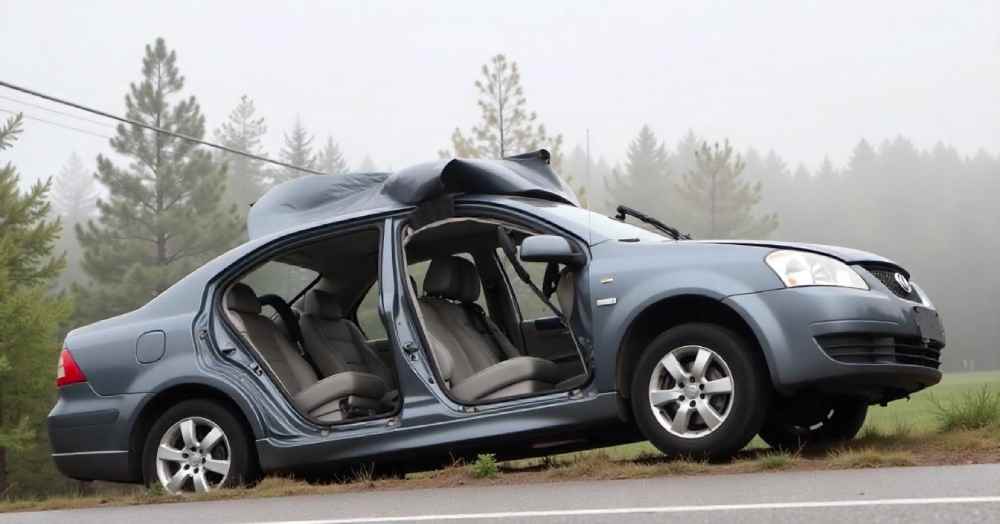
When your car meets with a devastating accident on the road and repair costs equal to or exceed a certain point, the vehicle is considered a total loss. This means your car is no longer worth repairing, and you can buy a new vehicle.
The point that determines whether a car is a total loss or not after an accident is called the 'total loss threshold'. Simply put, the total loss threshold is the percentage of the car's ACV (actual cash value) before the accident used to total a vehicle. The total loss threshold can range from 50% to 100% depending on local laws and the insurance policy.
A total loss claims in Florida allows you to seek compensation after your vehicle is totaled. Other than your car being damaged in an accident, you can also file the claim if it's stolen and not recoverable. Remember that when you file a total loss claim, the insurance company doesn’t pay for its repair. They pay you for the vehicle’s ACV (Actual Cash Value) or IDV (Insured Declared Value) minus deductibles.
Before you file a total loss claim after your car is totaled, you must know the specific rules related to it. The important laws regarding a total loss claim in Florida are as follows:
Under the Florida Statute, your car is officially totaled if the estimated repair cost equals or exceeds 80% of the car’s ACV prior to the accident. Insurers also consider salvage value in addition to the threshold. If the sum of the repair costs and the damaged car’s estimated sold price exceeds ACV, they total the vehicle.
In Florida, insurers must value your car based on local, comparable vehicles. They need to use valuation manuals, like NADA, Kelley Blue Book, etc. If you agree on a third valuation method, insurers must use it to determine whether your car is a total loss.
Once you are awarded a total loss settlement, the insurer is obligated to pay for the ACV plus sales tax, title transfer, and licence transfer fees.
They are not allowed to claim junk or heavily damaged cars as comparables, as this reduces your payout. The cars used as comparables must be of the same manufacturer and have similar body type, options, and mileage. These cars should be in better condition than yours and available for inspection near your residence.
In case you have a car loan, insurers must provide a check jointly payable to you and the lienholder to clear the debt.
Insurers use a specific formula to determine both the total loss designation and your settlement amount.
It is the value your car had before the accident, taking into consideration depreciation, the market, the car’s condition, and mileage.
If the repair costs ≥ 0.80 x ACV, the car is a total loss.
Your final settlement amount is calculated as:
Payout = ACV - Deductible
Filing a total loss claim in Florida is a process with many steps. Here is a rundown of the entire procedure.
If you have filed a total loss claim in Florida and feel like the insurer is offering a low payout, then take the following steps for a fair settlement.
When your car meets with an accident and is damaged extensively, only filing a total loss claim in Florida is the solution. We are ADR Claims, a team of skilled and experienced auto appraisers. We will help you navigate the entire process. We also offer other services, like fleet and commercial appraisals, lease return inspection, heavy equipment appraisal, etc. Contact us to book your appraisal service.
Our quick and simple appraisal process can help you recoup vehicle-related losses.
